
Two-Factor Authentication (2FA) Implementation
-
0 sales
- 284 views
- Save
0 /5.0
User review

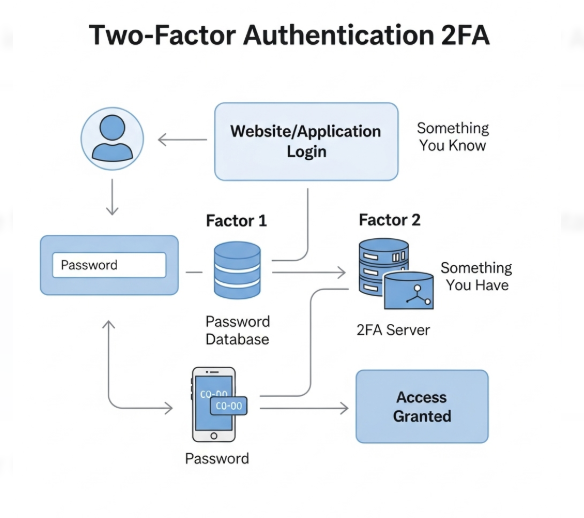


Two-Factor Authentication (2FA) Implementation – Full Scope
1. Discovery & Requirements Gathering
- Assess current authentication mechanisms and identify systems requiring 2FA
- Define security, compliance, and user experience requirements
- Identify user groups (employees, customers, partners) and their authentication needs
2. Strategy & Method Selection
- Choose appropriate 2FA methods (TOTP apps, SMS, email, hardware tokens, biometrics)
- Determine risk-based or mandatory enforcement by user role or activity
- Evaluate integration with existing identity providers (Okta, Azure AD, Auth0, custom SSO)
3. Implementation & Integration
- Deploy 2FA mechanisms within applications, portals, and systems
- Integrate with authentication flows (login, password reset, high-risk actions)
- Configure secure token generation, delivery, and validation processes
- Implement fallback and recovery mechanisms for lost/locked-out users
4. User Experience & Rollout
- Provide seamless onboarding with step-by-step 2FA enrollment
- Ensure mobile compatibility for authenticator apps and SMS
- Deliver clear instructions and support resources to reduce friction
5. Security & Compliance
- Enforce strong cryptographic standards for OTP generation and transmission
- Prevent common attacks (phishing, man-in-the-middle, SIM swapping)
- Align with compliance frameworks (PCI DSS, HIPAA, GDPR, NIST)
6. Monitoring & Management
- Enable centralized management for 2FA enrollment, status, and logs
- Monitor authentication attempts for anomalies or brute-force patterns
- Configure alerts for suspicious login behavior or repeated failures
7. Maintenance & Governance
- Regularly review and update 2FA methods based on emerging threats
- Maintain audit trails of authentication activities for compliance reporting
- Provide training for users and administrators on secure usage of 2FA
Additional services
-
0 $
-
0 $
-
0 $
-
0 $
-
0 $