
CRM Data Migration & Consolidation
-
0 sales
- 277 views
- Save
0 /5.0
User review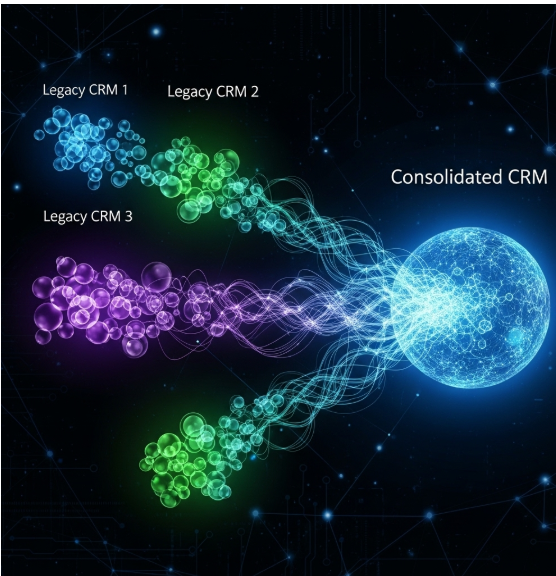
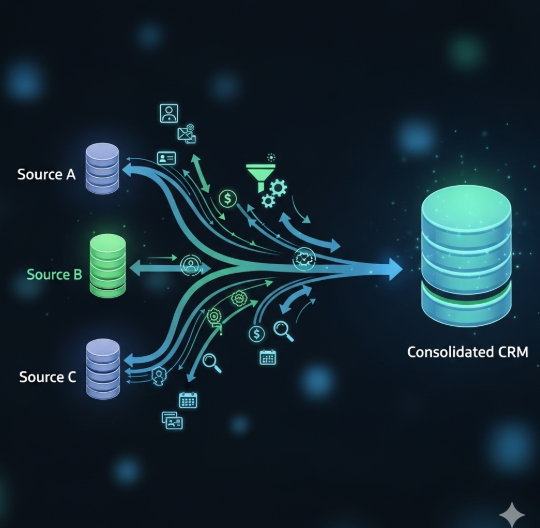
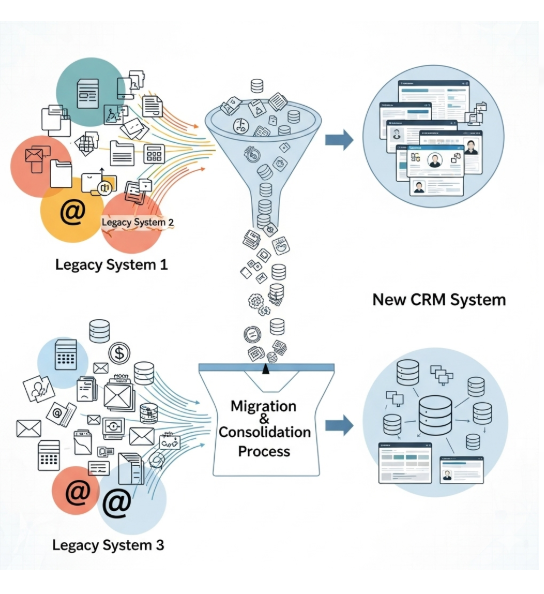


CRM Data Migration & Consolidation
1. Discovery & Assessment
- Review existing CRM systems, databases, and data sources.
- Identify data types, volume, and quality issues (duplicates, inconsistencies, incomplete records).
- Understand business objectives: unified customer view, accurate reporting, and improved operational efficiency.
- Map key stakeholders, data owners, and compliance requirements.
2. Strategy & Planning
- Define migration and consolidation goals:
- Centralize customer, lead, and contact data
- Maintain data integrity and historical records
- Enable seamless integration with other business systems
- Establish KPIs: data accuracy, completeness, migration success rate, and post-migration adoption.
- Develop a migration roadmap including timelines, milestones, and resource allocation.
3. Data Mapping & Standardization
- Map fields from source systems to target CRM schema.
- Standardize naming conventions, formats, and data types.
- Identify required transformations for consistency (e.g., merging duplicates, normalizing addresses).
- Define rules for handling missing or conflicting data.
4. Migration Execution
- Extract data from legacy systems using ETL processes or APIs.
- Transform and clean data according to predefined rules.
- Load data into the target CRM while maintaining historical records and relationships.
- Validate migration in a sandbox environment before full deployment.
5. Integration & Consolidation
- Merge multiple data sources into a single CRM instance.
- Ensure relationships between contacts, companies, deals, and activities are maintained.
- Sync with integrated tools (marketing automation, ERP, support platforms).
- Implement workflows to prevent data duplication post-migration.
6. Testing & Quality Assurance
- Perform data validation and reconciliation between source and target systems.
- Test workflows, automations, and reporting for proper functionality.
- Conduct user acceptance testing (UAT) with key stakeholders.
- Verify compliance with privacy regulations and security policies.
7. Training & Documentation
- Provide training for users on the new CRM setup and data access.
- Document migration processes, field mappings, and data governance rules.
- Share guidelines for maintaining data quality post-migration.
8. Monitoring & Maintenance
- Monitor data integrity and system performance post-migration.
- Conduct periodic audits to identify errors, duplicates, or inconsistencies.
- Update integrations, workflows, and automations as business needs evolve.
- Provide ongoing support to resolve data-related issues.
Value Delivered
- Consolidated, accurate, and unified customer data across all systems.
- Reduced manual effort, errors, and data silos.
- Improved reporting, analytics, and business decision-making.
- Seamless integration with CRM workflows, automations, and marketing tools.
- Scalable foundation for future CRM expansions and business growth.
Additional services
-
0 $
-
0 $
-
0 $
-
0 $
-
0 $