
Dynamic Pricing Calculators & Cost Estimators
-
0 sales
- 281 views
- Save
0 /5.0
User review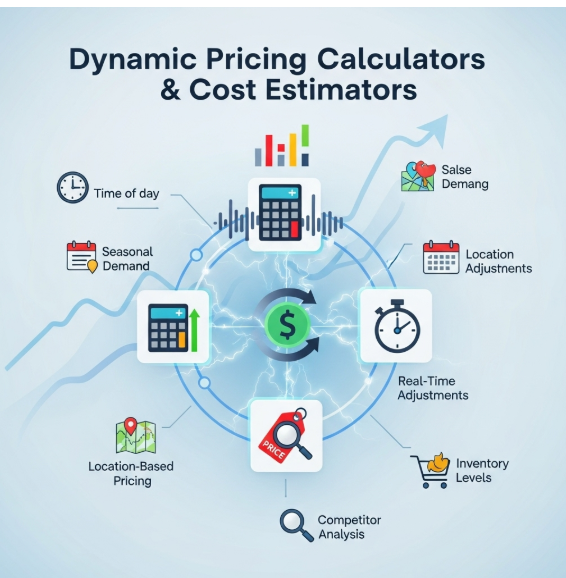
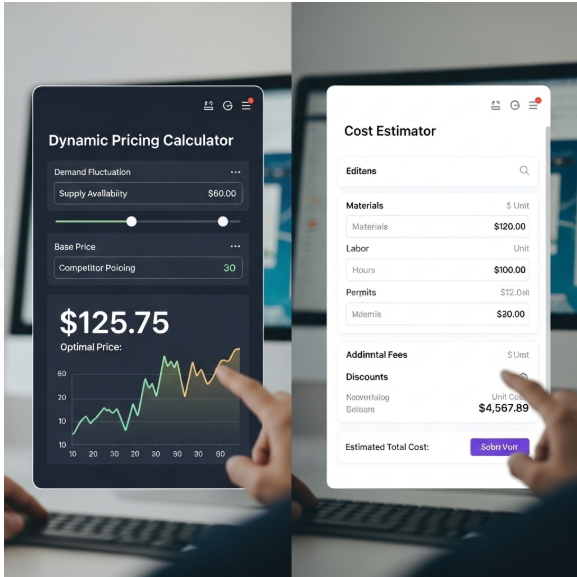
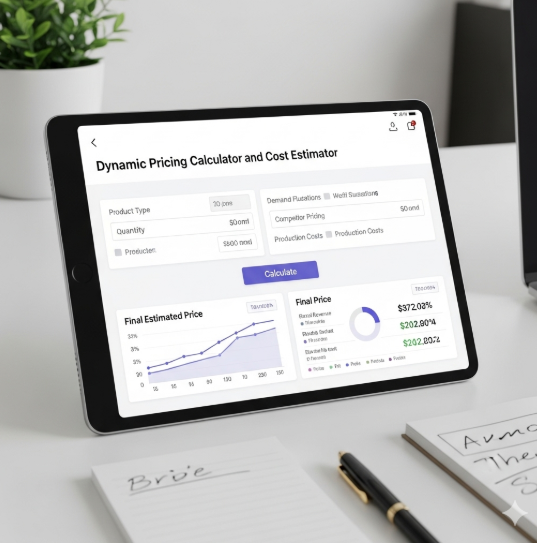


Dynamic Pricing Calculators & Cost Estimators
1. Discovery & Assessment
- Audit current pricing models, cost structures, and estimation processes.
- Identify business objectives: provide accurate, real-time pricing, improve transparency, and enhance customer experience.
- Map use cases for calculators: website quotes, sales proposals, and internal cost estimation.
- Assess CRM, ERP, and e-commerce systems for integration capabilities and data availability.
2. Strategy & Planning
- Define goals for dynamic pricing and cost estimation:
- Offer real-time, personalized pricing based on inputs such as product options, quantities, or customer segment
- Enable self-service calculators for customers and sales teams
- Integrate pricing logic with CRM and ERP systems for accuracy and automation
- Establish KPIs: quote conversion rate, average deal size, customer satisfaction, and estimation accuracy.
- Segment users or customers for customized pricing and recommendations.
3. Pricing Logic & Calculator Design
- Develop rules and formulas for dynamic pricing based on costs, discounts, promotions, and customer segments.
- Design user-friendly interfaces for calculators and cost estimators on web, mobile, or internal tools.
- Include advanced features: configurable options, quantity-based discounts, bundle pricing, and real-time updates.
- Implement validation to prevent errors and ensure accurate results.
4. Integration & Technical Setup
- Integrate calculators with CRM, ERP, e-commerce, and analytics platforms.
- Enable real-time data synchronization for product costs, inventory levels, and promotions.
- Configure APIs, webhooks, or middleware for seamless communication between systems.
- Ensure secure handling of sensitive pricing data and customer inputs.
5. Testing & Quality Assurance
- Test calculators for accuracy, usability, and responsiveness across devices and browsers.
- Validate pricing formulas, discount rules, and edge cases.
- Ensure integration workflows update CRM, ERP, or quote systems correctly.
- Monitor performance under high traffic or complex calculations.
6. Reporting & Analytics
- Track metrics such as usage frequency, conversion rate, quote generation, and revenue impact.
- Analyze pricing performance by product, customer segment, or region.
- Provide dashboards for sales, marketing, and finance teams.
- Use insights to refine pricing models and promotional strategies.
7. Optimization & Continuous Improvement
- Continuously refine pricing logic, rules, and user interface based on feedback and analytics.
- Test new pricing strategies, promotions, and calculator features.
- Align dynamic pricing with market trends, competitor pricing, and customer behavior.
- Update workflows to reflect changes in costs, inventory, or product offerings.
8. Ongoing Monitoring & Support
- Monitor calculator accuracy, system integrations, and user interactions.
- Maintain pricing rules, workflows, and integration health.
- Provide technical support and documentation for internal teams and customers.
- Conduct periodic audits to ensure pricing accuracy, transparency, and compliance.
Value Delivered
- Real-time, accurate pricing and cost estimation for customers and sales teams.
- Improved transparency, trust, and user experience.
- Increased conversions and average deal size through tailored pricing and recommendations.
- Data-driven insights to optimize pricing strategies and promotions.
- Scalable solution for multiple products, services, and customer segments.
Additional services
-
0 $
-
0 $
-
0 $
-
0 $
-
0 $