
Live Data Reporting Integration
-
0 sales
- 337 views
- Save
0 /5.0
User review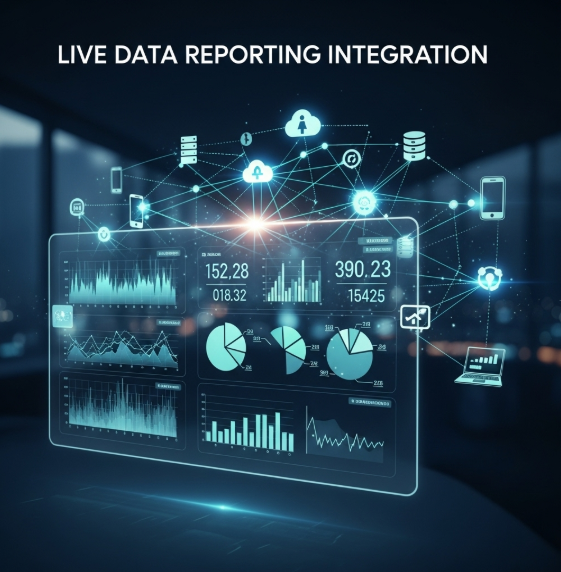

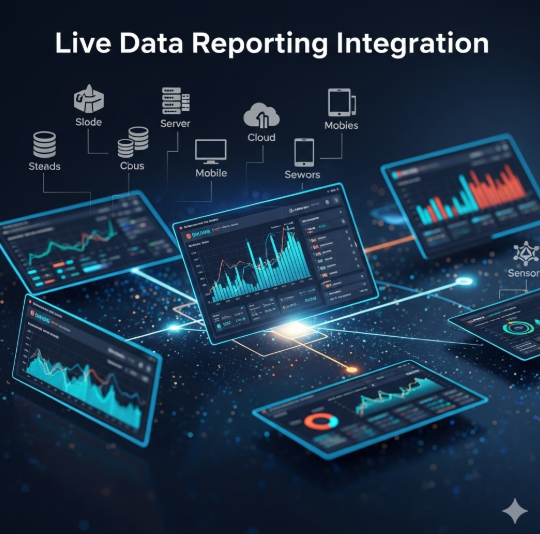
Live Data Reporting Integration
1. Discovery & Assessment
- Review existing reporting systems, dashboards, and data sources.
- Identify business objectives: real-time insights, data-driven decisions, and operational efficiency.
- Map critical KPIs, metrics, and stakeholder requirements.
- Assess system compatibility and integration points for live data feeds.
2. Strategy & Planning
- Define integration goals:
- Consolidate data from multiple sources into real-time dashboards
- Enable timely reporting for marketing, sales, finance, and operations
- Improve decision-making with accurate, live insights
- Establish KPIs: data latency, accuracy, dashboard usage, and reporting impact.
- Determine priority data sources, update frequency, and visualization requirements.
3. Data Mapping & Standardization
- Identify and map key data fields from all source systems.
- Standardize formats, naming conventions, and metrics definitions.
- Define rules for data cleaning, deduplication, and transformation.
- Ensure compliance with data privacy regulations and internal governance policies.
4. Integration Design & Development
- Select appropriate integration method: APIs, ETL pipelines, or middleware platforms.
- Implement secure and reliable real-time or near-real-time data feeds.
- Configure automated alerts for anomalies, thresholds, or data errors.
- Set up role-based access for dashboards and reporting tools.
5. Dashboard & Visualization Setup
- Design interactive dashboards with live charts, KPIs, and drill-down capabilities.
- Ensure responsive layouts for desktop, tablet, and mobile devices.
- Implement filters, segmentations, and dynamic reporting options for different teams.
- Connect dashboards to CRM, ERP, marketing automation, and other operational systems.
6. Testing & Quality Assurance
- Validate data accuracy, consistency, and latency across all dashboards.
- Test dashboard functionality, interactive filters, and drill-downs.
- Ensure system performance under high data volume and concurrent usage.
- Verify access controls and compliance with data security standards.
7. Optimization & Continuous Improvement
- Refine dashboards and integrations based on user feedback and evolving business needs.
- Implement advanced analytics, predictive insights, and AI-driven recommendations.
- Continuously monitor data sources for reliability and integrity.
- Update visualizations and reporting metrics to reflect changing KPIs.
8. Ongoing Monitoring & Support
- Monitor live data feeds, system performance, and dashboard usage.
- Provide troubleshooting, maintenance, and updates for integrations.
- Conduct periodic audits to ensure accuracy, relevance, and compliance.
- Train stakeholders and teams on interpreting and using real-time data dashboards.
Value Delivered
- Real-time visibility into critical business metrics and KPIs.
- Faster, data-driven decision-making across teams.
- Consolidated insights from multiple systems for comprehensive reporting.
- Increased operational efficiency and accuracy in reporting.
- Scalable and adaptable solution for evolving business data needs.
Additional services
-
0 $
-
0 $
-
0 $
-
0 $
-
0 $