
Predictive Lead Scoring Models
-
0 sales
- 278 views
- Save
0 /5.0
User review

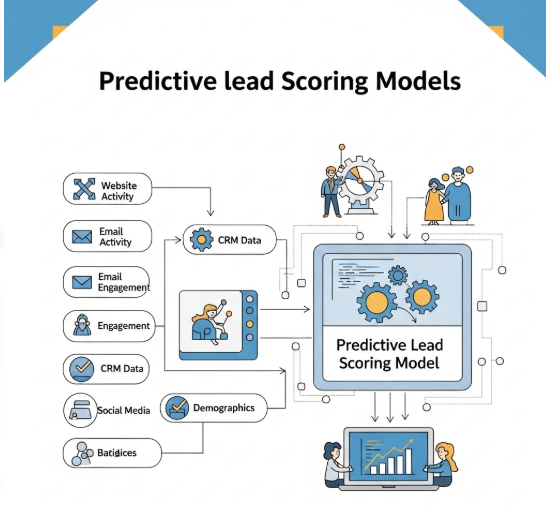


Predictive Lead Scoring Models
1. Data Collection & Preparation
- Aggregate historical CRM, marketing automation, and sales data.
- Capture demographic (industry, role, company size) and behavioral signals (website visits, email engagement, event participation).
- Clean and normalize data to ensure consistency across sources.
2. Feature Engineering
- Define key attributes impacting conversion likelihood (e.g., job title, firmographics, buying intent signals).
- Generate engagement-based features (email opens, demo requests, trial sign-ups).
- Include time-decay factors to prioritize recent activity over older actions.
3. Model Development
- Use supervised machine learning models (logistic regression, random forest, gradient boosting, neural networks).
- Train on historical data labeled with outcomes (won vs. lost deals).
- Apply cross-validation to avoid overfitting.
4. Scoring & Prioritization
- Assign probability-based scores (0–100) representing conversion likelihood.
- Categorize into tiers (Hot, Warm, Cold leads).
- Use thresholds to trigger automation (e.g., leads >70 routed to sales instantly).
5. Continuous Learning
- Update models with new deal outcomes to improve accuracy.
- Incorporate real-time signals (product usage, intent data from third-party providers).
- Adjust weighting as buying behavior patterns evolve.
6. Monitoring & Optimization
- Track key metrics (precision, recall, AUC) to evaluate model performance.
- Compare predictive scoring against rule-based scoring to measure lift.
- Monitor for model drift and retrain periodically.
7. Business Integration
- Sync predictive scores with CRM for sales prioritization.
- Align sales and marketing on score thresholds and follow-up SLAs.
- Provide sales teams with explainable insights behind scores (e.g., “High engagement with pricing page + Director-level role”).
8. Compliance & Ethics
- Ensure compliance with data protection regulations (GDPR, CCPA).
- Avoid biased features that could lead to unfair lead prioritization.
- Provide transparency on scoring logic to business stakeholders.
Additional services
-
0 $
-
0 $
-
0 $
-
0 $
-
0 $